• Investing
  • Stock
  • Economy
  • Editor’s Pick
Portfolio Performance Today
Stock

Taiwan rejects US chip plan; trade talks shift to tariffs

by October 1, 2025
by October 1, 2025

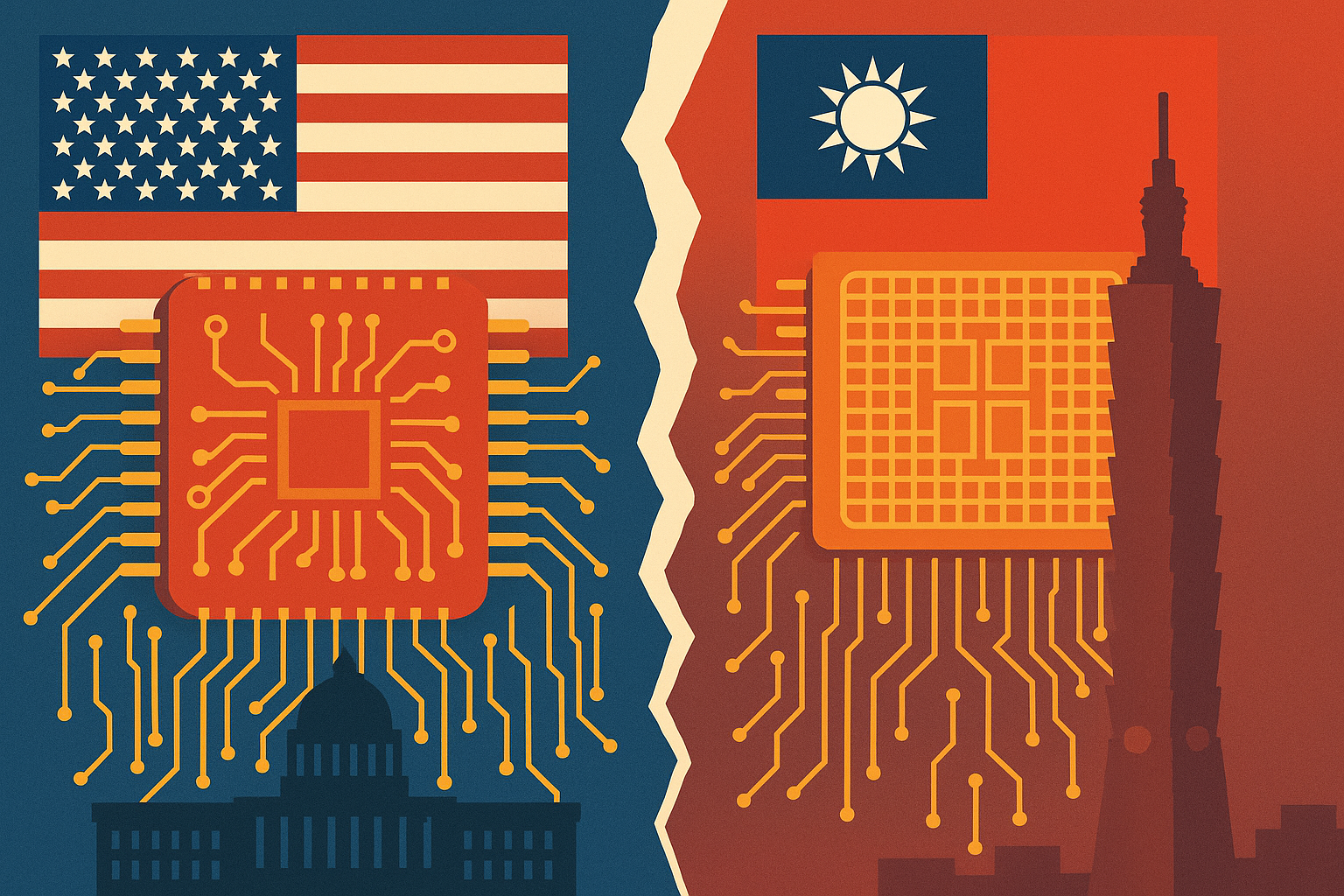
Taiwan has firmly rejected a proposal from Washington that the US should produce half of the semiconductors it consumes, signalling a deeper layer of complexity in ongoing trade discussions between the two economies.

Vice Premier Cheng Li-chiun confirmed that the demand came from the US side and that Taiwan had never agreed to such a commitment.

The disagreement comes as both governments work to resolve tensions over reciprocal tariffs and the Section 232 investigation, which has expanded to cover a wider range of goods.

With semiconductors at the centre of bilateral trade, the debate highlights how chip security has become entangled with tariff policy.

Taiwan resists US semiconductor demand

Speaking on Wednesday, Cheng Li-chiun said the idea of meeting 50% of US semiconductor demand through local production was not on the negotiating table.

He clarified that Taiwan would not accept conditions of this nature, as the focus remained on Section 232-related concessions.

The US Commerce Secretary, Howard Lutnick, had earlier indicated in a NewsNation interview that Washington was in discussions with Taipei about reducing reliance on overseas chip production.

The comments underline the ongoing concerns in Washington about overdependence on Taiwan Semiconductor Manufacturing Co. (TSMC) and its extensive supply network.

US officials have consistently warned of risks linked to this concentration, particularly since the Covid-era shortages that disrupted industries ranging from car manufacturing to artificial intelligence development.

Section 232 investigation and tariffs

Taiwan’s cabinet stated that progress had been made following recent meetings with Lutnick and US representative Jamieson Greer.

More than 70% of Taiwan’s exports to the US are linked to semiconductors, which are directly affected by the Section 232 investigation. Negotiations are currently centred on reciprocal tariffs, Section 232 measures, and supply chain cooperation.

The US introduced a 20% reciprocal tariff on imports from Taiwan in July, which is higher than the rates applied to regional competitors such as Japan and South Korea.

Semiconductor products were exempted at the time, pending the outcome of the Section 232 review. Taiwan has signalled that any conclusion to negotiations will depend on both sides reaching agreement across these key areas.

US concerns over chip reliance

The US push to expand domestic semiconductor production stems from longstanding fears about reliance on a single market. Taiwan’s dominance in chip production has been identified as a strategic vulnerability.

During the Covid-19 pandemic, shortages of semiconductors exposed how critical the supply chain is for multiple sectors, including defence and advanced technology.

Washington’s latest proposal reflects this priority, but Taipei’s rejection highlights the limits of how far trade partners are willing to go in restructuring global chipmaking capacity.

Talks move towards supply chain cooperation

Despite the rejection of the 50% production demand, Taiwan confirmed that it remains committed to dialogue on broader cooperation. Both sides continue to weigh the impact of tariffs and regulatory investigations on semiconductor trade.

The outcome of these negotiations will not only influence trade balances but also shape how global chip supply chains evolve at a time of heightened geopolitical competition.

The post Taiwan rejects US chip plan; trade talks shift to tariffs appeared first on Invezz

0 comment
0
FacebookTwitterPinterestEmail

previous post
Intel delays Ohio chip plant to 2030 as state pushes for answers
next post
US govt shutdown begins: Who’s working, what’s closed & what it means for you

Related Posts

Salesforce jumps as AI tools help drive upbeat...

December 4, 2025

Is Micron really abandoning gamers for AI, and...

December 4, 2025

Hang Seng Index could be at risk of...

December 4, 2025

EU set to probe Meta’s integration of AI...

December 4, 2025

Russian wheat export prices hit lowest point since...

December 4, 2025

ExxonMobil shuts Singapore cracker, signals deep distress in...

December 4, 2025

Global growth slows but AI boom helps steady...

December 4, 2025

Is IndiGo’s pilot shortage pushing India’s air travel...

December 4, 2025

Marvell Technology to acquire Celestial AI for $3.25B

December 3, 2025

Morning brief: Republicans win Tennessee House seat; Asia...

December 3, 2025

Stay updated with the latest news, exclusive offers, and special promotions. Sign up now and be the first to know! As a member, you'll receive curated content, insider tips, and invitations to exclusive events. Don't miss out on being part of something special.

By opting in you agree to receive emails from us and our affiliates. Your information is secure and your privacy is protected.

Recent Posts

  • Shutdown Lessons on Institutional Fragility

    December 4, 2025
  • Third-Party Logistics firms to Invest in IoT Predictive Maintenance by 2025

    December 4, 2025
  • Nvidia stock continues slide: is the AI darling’s moat drying up as competition intensifies?

    December 4, 2025
  • Europe bulletin: Prada’s bold Versace play, UK crypto overhaul, Norway budget drama

    December 4, 2025
  • Evening digest: Bitcoin rebounds, silver hits records, Marvell makes a major AI power play

    December 4, 2025
  • US midday market brief: AI stocks stumble as Microsoft drama hits, but Dow powers ahead

    December 4, 2025

Editors’ Picks

  • 1

    Pop Mart reports 188% profit surge, plans aggressive global expansion

    March 26, 2025
  • 2

    Meta executives eligible for 200% salary bonus under new pay structure

    February 21, 2025
  • 3

    New FBI leader Kash Patel tapped to run ATF as acting director

    February 23, 2025
  • 4

    Walmart earnings preview: What to expect before Thursday’s opening bell

    February 20, 2025
  • 5

    Anthropic’s newly released Claude 3.7 Sonnet can ‘think’ as long as the user wants before giving an answer

    February 25, 2025
  • 6

    Cramer reveals a sub-sector of technology that can withstand Trump tariffs

    March 1, 2025
  • 7

    Nvidia’s investment in SoundHound wasn’t all that significant after all

    March 1, 2025

Categories

  • Economy (3,407)
  • Editor's Pick (348)
  • Investing (205)
  • Stock (2,315)
  • About us
  • Contact us
  • Privacy Policy
  • Terms & Conditions

Copyright © 2025 Portfolioperformancetoday.com All Rights Reserved.

Portfolio Performance Today
  • Investing
  • Stock
  • Economy
  • Editor’s Pick
Portfolio Performance Today
  • Investing
  • Stock
  • Economy
  • Editor’s Pick
Copyright © 2025 Portfolioperformancetoday.com All Rights Reserved.

Read alsox

20% of South Korean officials hold crypto...

March 27, 2025

Nvidia, AMD to share 15% of China...

August 11, 2025

Nvidia backs UK AI sector with $2.7B...

September 19, 2025