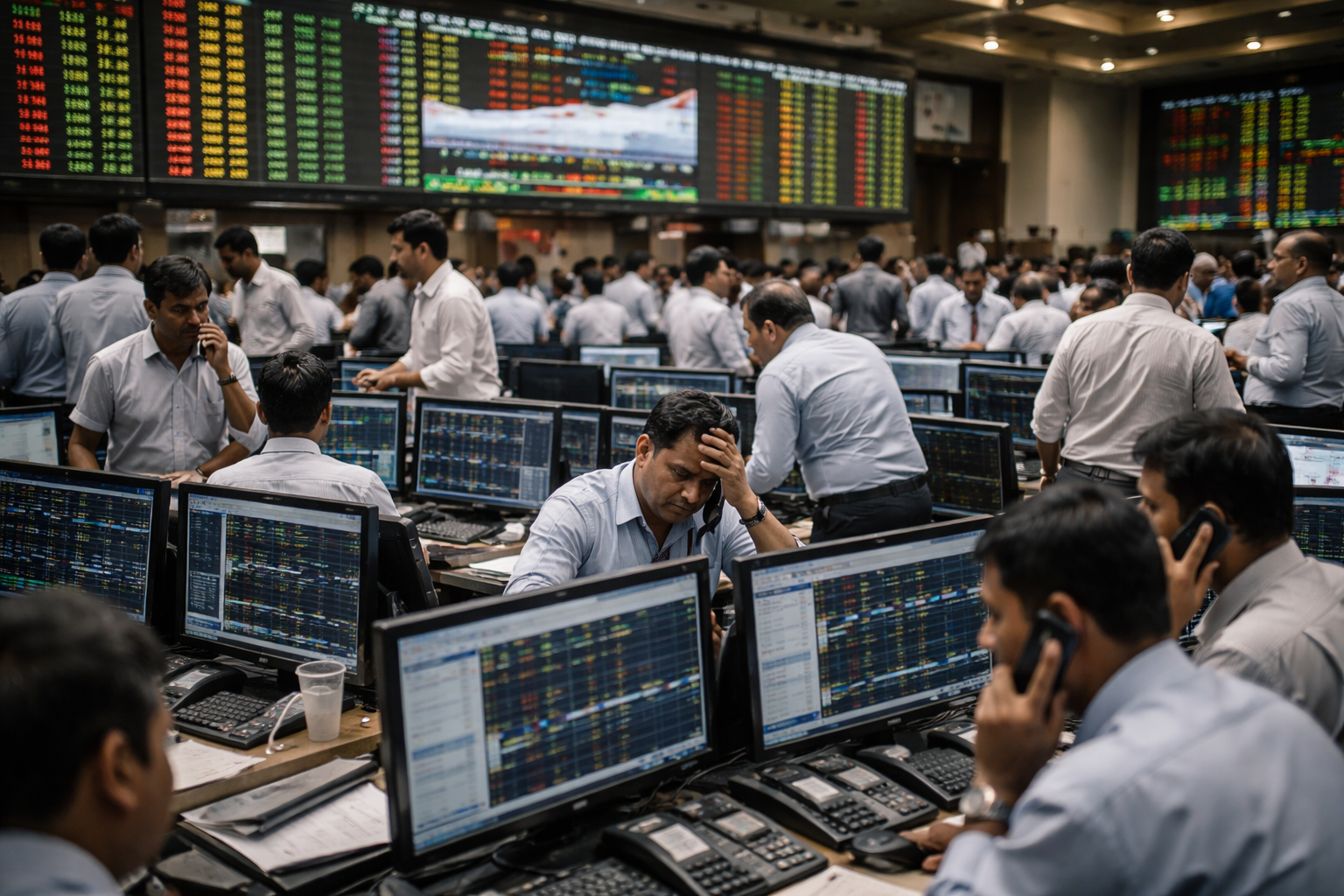
The Nifty 50 Index remains in a deep sell-off this week as concerns about the Indian economy face major challenges amid the ongoing Iran war. It dropped to INR 22,940 this week, and has now formed a death cross pattern, pointing to more downside in the near term.
Nifty 50 Index death cross points to more downside
The daily timeframe chart shows that the Nifty Index reached a top at INR 26,428 this year. It formed a triple-top pattern at that level and a neckline at INR 24,550. A triple-top is one of the most common bearish reversal sign in technical analysis.
Worse, the index has already flipped the Supertrend indicator from green to red, a sign that bears remain in control for now.
The index has formed a death cross pattern, which happens when the 50-day and 200-day Exponential Moving Averages (EMA) cross each other. This is one of the most common bearish signs in technical analysis. It was the first time since February last year that the two moving averages crossed each other.
The Relative Strength Index (RSI) and the Percentage Price Oscillator (PPO) have continued falling, with the former being at its lowest level since February this year.
Therefore, the most likely scenario is where the index continues falling as sellers target the next key target level at INR 21,742, its lowest level in April last year. This price target is about 6.5% below the current level.
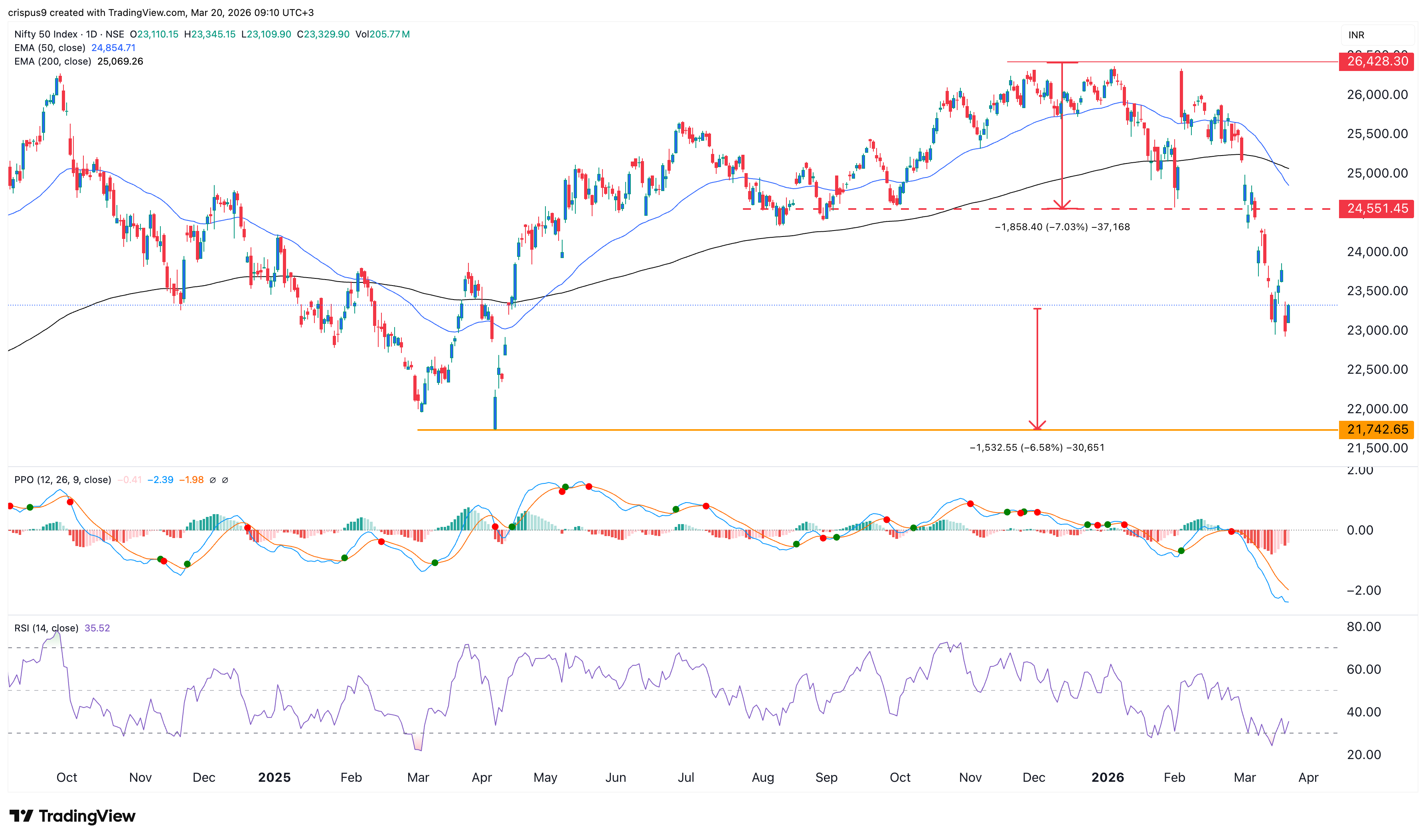
Nifty 50 Index chart | Source: TradingView
India stocks are facing major headwinds
The ongoing Nifty 50 Index has slipped in the past few months, mirroring the performance of the Indian rupee, which has slumped to a record low.
Indian companies are struggling as the Iran war continues, leading to higher crude oil and natural gas prices. This war will lead to higher inflation in the country. About 90% of liquefied petroleum gas moves through the Strait of Hormuz, which has been closed.
A report released last week showed that India’s inflation jumped to 3.21% in February, a trend that may continue in the coming months since oil prices have jumped by over 50% since the war started.
As a result, there is a likelihood that the Reserve Bank of India (RBI) will start to hike interest rates later this year, which explains why bond yields have soared. Data shows that the ten-year bond yield jumped to 6.75%, its highest level since March last year. Similarly, the five-year yield rose to 6.5% from the year-to-date low of 6.3%.
Most companies in the Nifty 50 Index have retreated this year. Bajaj Finance stock has dropped by 20% in the last 30 days, while Larsen & Toubro, Tata Motors, Eternal Limited, Maruti Suzuki, Bajaj Finserv, HDFC, and Eicher Motors have dropped by over 15% in the last 30 days.
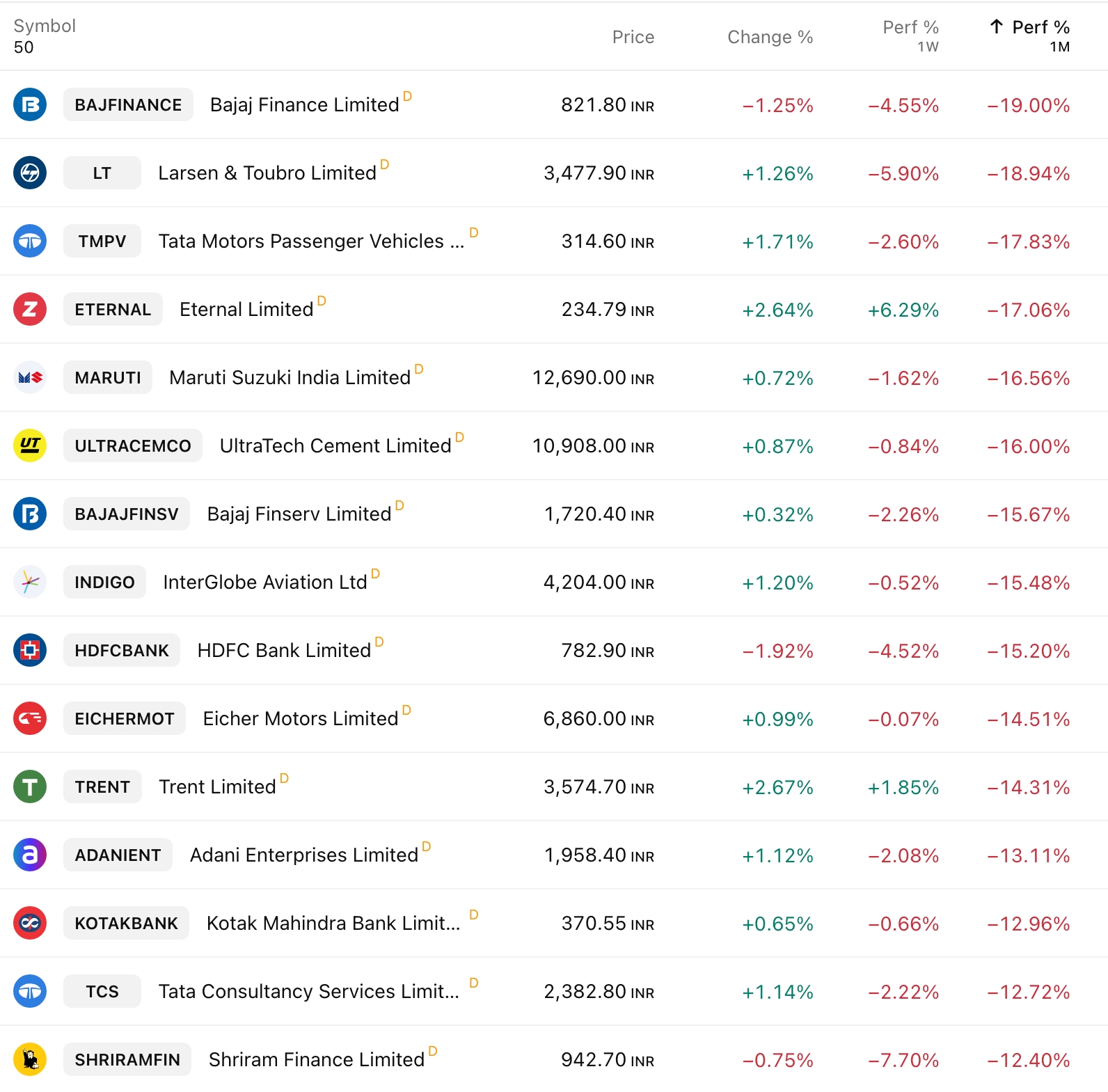
HDFC stock price crashed this week after the company’s chairman stepped down, citing differences with the management on values and ethics. Its stock has dropped by 23% from its highest point in December last year.
Tata Motors stock crashed after the company recalled 121,500 cars in the country. Also, the company warned that the ongoing Iran war will have an impact on its business as gas shortage continues and as shipping concerns remain.
The post Nifty 50 Index forms a death cross as Bajaj, Tata Motors, HDFC shares tumble appeared first on Invezz