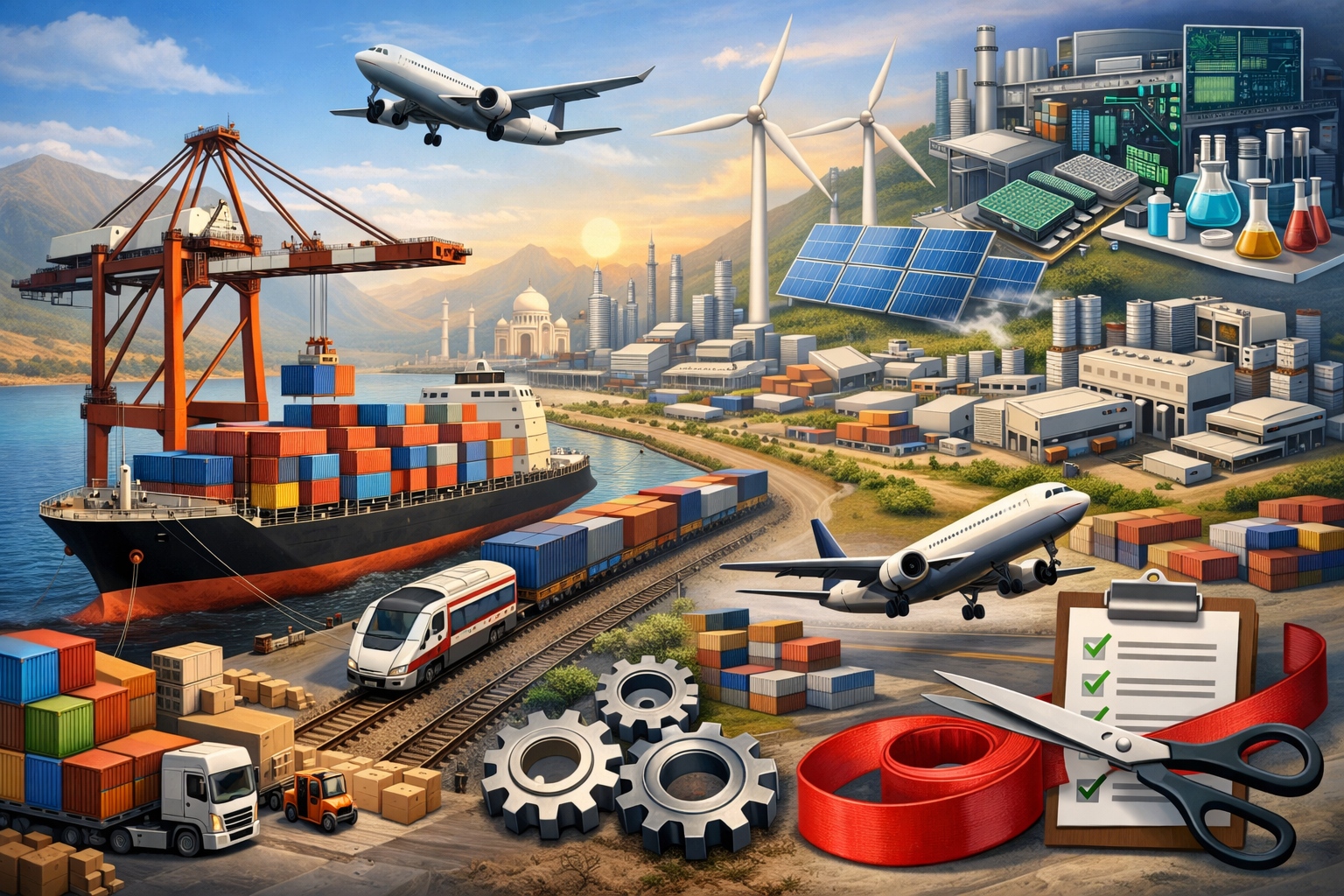
India is preparing a fresh manufacturing strategy aimed at tripling the nation’s exports by 2035, according to a Reuters exclusive.
Instead of relying on heavy public spending, the plan is expected to lean on structural reforms to make it easier for companies to build, expand, and operate factories across the country.
In Prime Minister Narendra Modi’s third attempt to lift manufacturing as a bigger share of the economy, the government is prioritising 15 sectors, ranging from high-end semiconductors and metals to labour-intensive industries such as leather.
The goal is to strengthen growth momentum and raise annual goods exports to $1.3 trillion, the report said.
Why Modi is trying again to boost manufacturing
Modi’s government has already made two major pushes to lift manufacturing, but both fell short of a key target.
The “Make in India” campaign, launched in 2014, aimed to raise manufacturing to 25% of gross domestic product, but the share did not double as planned.
A second attempt came in 2020, when the government rolled out a $23 billion package of incentives.
Even that effort failed to deliver the scale of transformation policymakers had hoped for, according to the officials.
One government official involved in drafting the new policy said that past initiatives created only modest, incremental progress.
By widening the focus beyond financial incentives and towards fixing structural barriers, policymakers are trying to avoid repeating earlier outcomes while still keeping the ambition of manufacturing-led export growth intact.
National Manufacturing Mission and sector priorities
The government’s new structure, called the National Manufacturing Mission, was announced in the budget last year, though detailed plans were not disclosed at the time.
The mission will oversee the development of manufacturing hubs and coordinate action across different parts of government.
The plan focuses on 15 targeted sectors, including high-end semiconductors, metals, and leather.
According to the report, officials said the sector mix reflects a push to strengthen both advanced manufacturing capabilities and labour-intensive production that can support jobs and export volumes.
The manufacturing hubs are expected to be identified based on existing infrastructure, geographic advantages, and proximity to ports, according to the officials.
By building around these strengths, the government aims to support export-driven manufacturing clusters rather than spreading resources too thinly.
Modest funding, with support decided case by case
Under the current plan, the government will spend about 100 billion rupees ($1 billion) to build infrastructure for around 30 manufacturing hubs across the targeted sectors.
It will also provide grants of $218 million for advanced areas such as chips and energy storage.
Unlike earlier approaches that leaned on large, pre-budget fiscal packages, this effort is expected to use more selective financial support.
Industry assistance will be decided on a case-by-case basis, based on recommendations made by a new government panel to administrative departments.
The officials cited in the report said that this time funding is relatively modest because the plan is meant to focus on easing regulatory and compliance burdens, which they described as the biggest impediment to manufacturing in India, rather than offering broad subsidies.
Cutting red tape and aligning state policies
A major part of the strategy is aimed at reducing delays and friction that slow down investment and factory development.
The new panel will focus on enabling faster regulatory clearances, approvals for land, and cheaper financing for large projects.
The panel will be chaired by a minister and include senior bureaucrats, including the cabinet secretary.
It will also oversee the building of manufacturing hubs across the 15 sectors and work with state governments to ensure steady and affordable electricity supplies for these units, the officials said.
Officials also flagged India’s patchwork of federal and state-level rules as a major drag on manufacturing investment.
Divergent policies across states, including different labour regulations and business compliance requirements, have pushed up costs for firms operating in multiple parts of the country.
Details of the National Manufacturing Mission could be announced in the budget on February 1, but the officials told Reuters that the decision will be made closer to the date.
The post India plans manufacturing push to triple exports by 2035 appeared first on Invezz