
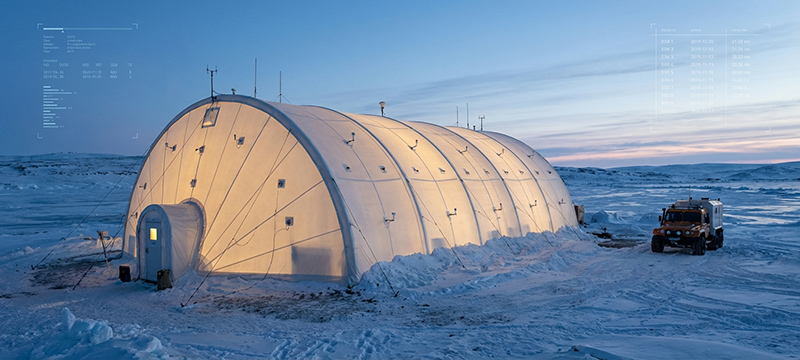
Working in the Arctic means being exposed to some of the most severe conditions in the world, including scaring winds, heavy snow loads, deep freezes, and unpredictable storms. Unless significant engineering, maintenance, and costs are invested, traditional structures find it difficult to survive these extremes. This is why smart fabric buildings, equipped with modern IoT technology, are gaining increasing popularity among industries operating in remote areas of the north.
Whether it’s resource extraction, aviation, military operations, or research-intensive science, these innovative structures deliver safety and reliability in extreme conditions. As more companies seek resilient solutions in sub-zero environments, many are opting for pre-engineered structures as a proven alternative.
Real-Time Monitoring Creates Safer Working Conditions
Smart fabric buildings can continuously monitor environmental and structural conditions, a key benefit. IoT sensors can monitor wind velocity and internal temperature, as well as the amount of snow and membrane tension.
Moreover, this real-time visibility is essential in an Arctic environment. It enables teams to identify hazardous changes before they become critical and they have time to prepare to avoid them instead of responding to the emergencies. Working hundreds of miles from the nearest town, a few hours’ warning may be the difference between routine maintenance and a life-or-death incident.
These streams of data are used to drive dashboards that can be accessed anywhere with an internet connection. Although a storm may occur at night or when a crew is away, automated alerts will ensure the decision-maker is aware. Rather than periodic checks or manual inspections, the operators will be in constant contact with the well-being of the structure, minimising risk to all parties involved.
Intelligent Feedback to increase Structural Durability
Fabric structures are designed to withstand icy weather, but with the introduction of the IoT, their longevity is taking it to a whole new level. The sensors installed in the structure would detect how the materials respond to environmental stressors, such as heavy snow loads or abrupt bursts of Arctic wind. Once a building starts straining beyond expected levels, the data will trigger alerts to enable operators to act urgently.
Furthermore, this is a proactive, preventative measure that enables snow-clearing teams to clear and clean tension or strengthen certain sections before they are damaged. Crews can also ensure optimal conditions at all times, rather than responding to failures. This will wear out much more slowly, prolonging the structure’s life and ensuring smooth operation even in the most severe Arctic winters.
Energy Management is More Innovative
The Arctic is very energy-intensive. Warming a building in very low temperatures burns a lot of fuel or power and continuous change of temperature causes unpredictability in the control of energy. Fabric buildings can automatically adapt to external conditions with HVAC systems connected to the IoT and smart thermostats.
Such systems adapt habits, maximise fuel consumption and control internal weather with accuracy. An illustration of this is that, rather than using heaters at full capacity during moderate temperature drops, the intelligent systems would reduce the output progressively to a steady temperature. They also notice when there is heat loss through open entrances or poor insulation and operators therefore act instantly.
Moreover, this intelligent energy management can lower operation expenses and also assist in the provision of comfortable and stable working conditions as well as equipment conditions. Fabrics in the form of lightweight structures already provide a great insulation option, and when combined with IoT-driven climate control, they become even more effective.
Improving Emergency Preparedness in Remote Regions
The Arctic terrain is rugged in case of an emergency- the response time is considerable, and weather can hinder movement, as well as the communication system is usually inefficient. EMF-built buildings with IoT devices enhance preparedness for emergency response through automation and redundancy. Inbuilt sensors can detect fire threats, carbon monoxide, electrical faults, or sudden temperature drops that may pose a danger to equipment or people.
Since every system is constantly communicating, it can raise an alarm, issue automatic alerts, or even activate the backup heating system. The features serve as alert systems, giving crews ample time to act or evacuate in the event of an emergency. In remote mining camps or exploration crews, this high level of safety is priceless.
Remote Operations Become More Practical and Reliable
In most of the Arctic, crews use a small number of on-site staff on projects, sometimes alternating teams in and out on a weekly or monthly basis. Fabric buildings that are IoT-enabled bring remote operations to a much more feasible level. Managers can check the structural health of the building, its energy use, interior climate, and environmental conditions without having someone in the building at all times.
This also enhances long-term planning. Using data trends, operators can know when maintenance will be required, estimate future energy consumption in the seasons ahead, and be prepared for harsh weather before it strikes. Already easy to erect and affordable, fabric buildings can now be used for both long- and short-term operations in the Arctic with the introduction of IoT.
Infrastructure New Paradigm in the Arctic
Smart building of fabrics is the future of construction in the Arctic. Their engineering prowess and Internet of Things capabilities make them a secure, effective, and dynamic solution for industries operating in harsh environments.
With organisations needing to identify methods to curb risk, extend the lifespan of building structures, and prevent crew members from being exposed, intelligent fabric structures are emerging as one of the most innovative solutions.
The post Smart Fabric Buildings: How IoT Devices Enhance Durability and Safety in Arctic Environments appeared first on IoT Business News.
