
Connected mining and heavy equipment illustrate how IoT is moving from experimental pilots to mission-critical infrastructure in extreme environments. The growing emphasis on ruggedization and edge AI signals that vendors must design vertically specialized hardware–software stacks rather than repurpose generic industrial IoT kits. Predictive safety capabilities are also changing buying criteria, pushing OEMs to bundle analytics, HMI, and cybersecurity as core features instead of add-ons. Overall, these developments anticipate broader IoT deployment in other remote, high-risk sectors such as construction, energy, and logistics corridors.
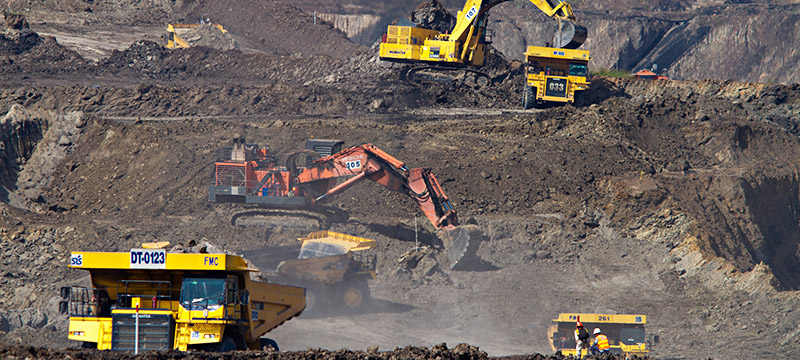
Mining and heavy equipment operations are undergoing a profound transformation as OEMs, fleet operators, and system integrators embrace connected machinery at scale. The sector—traditionally constrained by harsh environmental conditions, safety risks, and limited real-time visibility—is increasingly adopting ruggedized IoT technologies, AI-driven analytics, and predictive safety systems to reduce downtime and protect workers. This shift mirrors the wider industrial trend toward sensor-rich assets and cloud–edge architectures already visible in manufacturing and utilities, but with unique constraints linked to vibration, dust, corrosion, and extreme temperatures.
How Connectivity Is Reshaping Heavy Equipment Operations
Digitalization in mining has historically been slowed by the absence of stable connectivity in remote sites and the reliability limits of electronics exposed to heavy mechanical stress. That picture is now changing with more resilient IoT modules, advanced LPWAN and private LTE/5G deployments, and purpose-built telematics platforms. These technologies allow operators to monitor engine health, hydraulic systems, tire pressure, load cycles, and environmental conditions with a granularity that was impossible a decade ago.
Sensor fusion at the edge is also becoming standard: accelerometers, gyroscopes, pressure sensors, GNSS modules, thermal probes, and proximity detection systems are combined in compact units that meet IP67/IP69K ratings and MIL-STD vibration thresholds. This rugged design push is central to enabling uninterrupted data acquisition in high-impact environments.
When connectivity is available, OEMs can further integrate over-the-air (OTA) firmware updates and remote equipment diagnostics—features that have become common in connected vehicles and industrial machinery. These capabilities also support more proactive maintenance models, helping reduce unscheduled downtime and improving asset utilization. IoT Business News has previously examined the role of resilient connectivity in industrial automation, including the emergence of zero-touch eSIM provisioning for multi-carrier continuity, a trend increasingly relevant for mining sites requiring backup networks.
Ruggedization: Mechanical, Thermal, and Environmental Advances
The latest generation of connected mining equipment leverages several innovations in rugged design:
- Electronics enclosures now use reinforced composites or sealed aluminum with vibration-damping mounts to protect sensing elements and communication modules from repeated shock loads. Components are tested beyond standard automotive-grade tolerances, reflecting the unique rotational and impact patterns of excavators, drilling rigs, and haul trucks.
- Thermal resilience is being enhanced through integrated heat spreaders, conformal coatings, and low-power chip architectures that maintain performance in both arctic and desert environments.
These trends mirror broader IoT hardware developments, where semiconductor localization and new packaging techniques—covered in recent analyses on IoT Business News—play a growing role in supply chain resilience.
Such advances are narrowing the gap between industrial IoT systems used in controlled factory environments and those deployed in open-pit mines or underground tunnels.
Predictive Safety Systems: From Monitoring to Real-Time Intervention
Beyond operational insight, connectivity is enabling a new generation of predictive safety systems designed to reduce collisions, fatigue-related incidents, and mechanical failures. Machine-learning models are increasingly trained on vibration signatures, engine sound patterns, and operator behavior metrics to identify anomalies before they escalate.
Edge-based AI is particularly valuable in remote mines where backhaul bandwidth is limited. Processing data on the machine allows for microsecond-level responses—automatic brake assistance, hazardous proximity alerts, or load imbalance warnings—without relying on cloud latency. As these features evolve, OEMs are integrating advanced Human-Machine Interfaces (HMI) that consolidate alerts into intuitive dashboards, reducing cognitive load for operators.
Wearables and smart PPE are also entering mining sites, feeding contextual data into fleet management systems. Combined with vehicle telemetry, they create a richer picture of situational risk, allowing supervisors to implement dynamic safety protocols based on real-time exposure.
The Convergence of Cloud, Edge, and OT Systems
Modern mining operations increasingly resemble distributed digital ecosystems. Connectivity links mobile assets, fixed processing facilities, and autonomous systems such as robotic drills or drones for site inspection. Achieving this integration requires secure, bidirectional interfaces between Operational Technology (OT) and cloud-based analytics platforms.
Vendors are strengthening cybersecurity measures at the hardware level—secure boot processes, TPM modules, encrypted data pipelines—to counter growing concerns around ransomware and equipment sabotage. Mining has become a prime target due to its high-value operations and reliance on continuous uptime.
The convergence of IT and OT architectures also supports regulatory compliance and environmental monitoring. With global pressure on sustainability, connected equipment can document fuel consumption, emissions, and idle time with greater accuracy, enabling more transparent reporting and targeted efficiency gains.
Outlook: Toward Autonomous and Self-Maintaining Heavy Equipment
As ruggedized IoT hardware continues to mature, predictive systems are expected to shift from advisory functions to full automation. Autonomous haulage systems are already deployed in several large mines, and the integration of reliable on-board sensing with private 5G networks will accelerate this trajectory.
The future of connected mining will be defined by equipment capable of self-diagnosing failures, optimizing performance based on operating conditions, and interacting safely with human workers. Achieving this vision requires sustained innovation in rugged design, secure connectivity, and scalable data architectures—but the foundations are already in place.
In an industry where downtime and safety incidents carry enormous costs, connected heavy equipment is no longer an optional upgrade. It is becoming the operational backbone of modern mining.
The post Connected Mining and Heavy Equipment: Rugged Design Trends and Predictive Safety Systems appeared first on IoT Business News.
