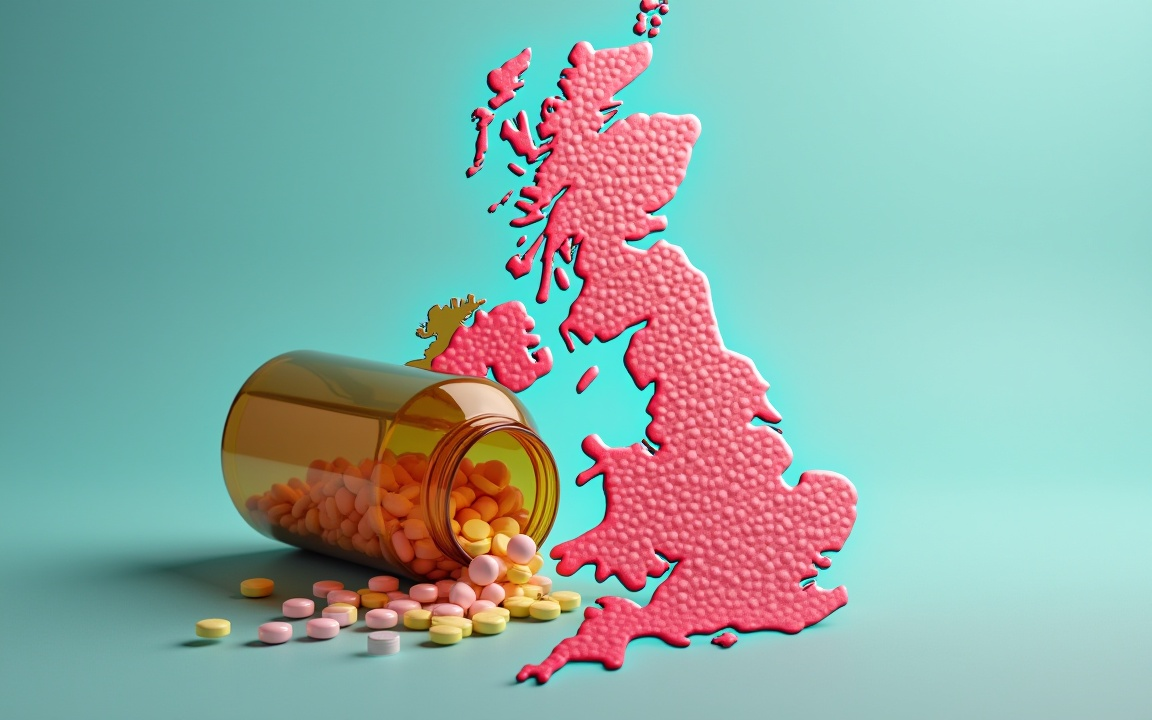
Eli Lilly’s chief executive Dave Ricks has delivered a stark warning to the UK government, branding Britain “probably the worst country in Europe” for drug prices and cautioning that the nation could miss out on new medicines unless conditions improve.
Speaking to the Financial Times, Ricks said the UK’s system of keeping drug costs low through rebates was discouraging innovation and investment.
“Unless that changes, I don’t think they will see many new medicines and I don’t think they will see much investment,” he said.
The remarks come amid mounting frustration within the pharmaceutical industry, as major players including Merck and AstraZeneca scale back or pause projects in the UK over what they describe as an increasingly hostile environment.
Industry pushback over NHS rebate scheme
Part of the reason for the dispute is the Voluntary Scheme for Branded Medicines Pricing, Access and Growth (VPAG), a 2024–2028 agreement between the government, the NHS, and the pharmaceutical industry.
The system requires drugmakers to pay rebates to keep NHS spending on branded medicines within budget, with higher clawback rates for newer drugs.
For pharmaceutical companies, these rebate rates — currently set at a minimum of 23.5% — are far higher than in other European nations.
Ricks said the system effectively penalises firms for their success.
“We would like to get rid of the clawback scheme called VPAG, which charges us for our own success,” he told the FT.
Negotiations over drug pricing collapsed in late August when Health Secretary Wes Streeting’s “generous” offer was rejected by drugmakers, leaving the scheme in place at levels the industry deems unsustainable.
A government spokesperson said talks could resume but insisted its previous proposal still stood: “Our door remains open to future engagement.”
Billions in investment projects paused or scrapped
The fallout has already hit the UK’s life sciences sector.
Eli Lilly temporarily halted shipments of its weight-loss drug Mounjaro in August ahead of a planned 170% price rise, while Merck announced this month it would scrap its London research hub and exit laboratories at the Francis Crick Institute and London Bioscience Innovation Centre, cutting 125 jobs.
AstraZeneca, Britain’s largest drugmaker, paused a planned £200 million expansion of its Cambridge research site and in January cancelled a £450 million vaccine plant in Liverpool after failing to secure government support.
Source: The Guardian
In total, four major projects worth more than £1.8 billion have been scrapped or suspended this year, with industry figures warning that at least 13 major investment decisions have gone against the UK since 2022.
Sanofi and Novartis have also scaled back, with Novartis reducing its UK presence from seven sites and over 4,000 staff to a single London base employing 1,200.
Industry voices warn of human cost
Pharma executives argue the dispute is not only about investment but also about patients’ access to new treatments.
Guy Oliver, UK head of Bristol Myers Squibb, told the Times that the company had cancelled 34 partnerships with the NHS in the past year due to chronic underinvestment.
“There is a human cost to all of this,” he said. “Patients are really suffering, and have been suffering for many, many years now.”
Paul Naish, Sanofi’s UK head of market access, added that substantial investment was now on hold, calling the situation “intolerable” for patients and urging the government to work with the sector.
Trump’s tariff threats add to firms’ pivot away from UK
Compounding the UK’s difficulties are pressures from across the Atlantic.
US President Donald Trump has demanded lower drug prices for American consumers and more domestic investment, threatening tariffs of up to 250% on pharmaceutical imports.
Pharma groups are responding by pivoting towards the US market.
Industry leaders say Trump’s stance, combined with the UK’s low-spending environment, is forcing companies to prioritise American expansion at Britain’s expense.
Merck’s decision to abandon its King’s Cross development — which had been set to open in 2027 — was partly attributed to this shift, alongside global cost-cutting measures.
The company has announced 6,000 job cuts and plans to save $3 billion annually.
Political response divided
The government has acknowledged the sector’s discontent but insists that fiscal pressures limit its options.
Science minister Ian Murray described Merck’s withdrawal as “deeply disappointing” but framed it as a commercial decision influenced by global trends.
However, opposition politicians argue the government is not doing enough.
Conservative shadow science secretary Julia Lopez said Merck’s remarks should serve as a wake-up call.
“Simply put, the UK is not internationally competitive,” she said. “The government must wake up, and do so now.”
Experts warn of long-term damage
Sir John Bell, emeritus regius professor of medicine at Oxford University, said Britain’s reduced spending on medicines compared with global peers was at the heart of the problem.
“Ten years ago, we used to spend 15% of our healthcare spend on pharmaceuticals. Now it’s 9%. The rest of the OECD are sitting between 14 and 20%,” he told the BBC.
He warned that large firms would continue to divert investments abroad if the UK remained unwilling to value innovation.
“The large companies do have to work in a system where they can sell their products, and if they can’t sell their products here, they’ll go and do their business somewhere else,” he said.
The post Eli Lilly CEO slams UK drug pricing: what’s behind the backlash? appeared first on Invezz