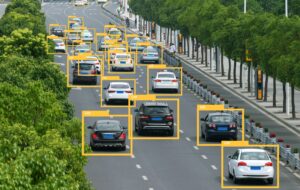
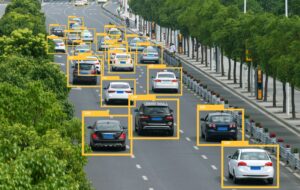
A surveillance state is being erected around the American public at an alarming rate. In many urban and suburban settings, anyone traveling on public streets or sidewalks will have his image captured by the ubiquitous surveillance cameras. A leisurely stroll around the neighborhood, as well as any conversation along the way, might be recorded if the city uses surveillance-enabled street lights. Even our own front yards might not be safe from the prying eyes of the state if a neighbor has a “smart” doorbell that shares data with law enforcement.
Rural areas are not exempt from this intrusion. Automatic License Plate Reader cameras (ALPRs, often contracted under the brand name FLOCK), are being placed on rural highways and on county lines in an increasing number of areas. Audio and video surveillance now cover remote corners of the Amazon Basin. Satellite technology could ensure that, one day, no square foot of the planet is unobserved.
The power of the modern surveillance state is without historical precedent. The argument that “there is no expectation of privacy in public” no longer adequately addresses the huge quantities of data that surveillance apparatus captures, stores, and analyzes.
While civil rights and other niche groups are sounding the alarm about the dangers of Big Brother, critics are surprisingly underrepresented among popular news outlets. When the topic of citizen surveillance is covered at all, these stories are often portrayed as a benign solution to a dangerous problem with the dangers to civil liberties receiving a brief nod, if even mentioned.
So why does the average citizen not have greater concern over these intrusions upon their civil liberties, in some cases even championing it? One answer to that question might be that these systems are a Trojan Horse. While they are dressed up as a gift that will protect society from all that they fear, it is the gift itself that poses the greatest threat.
The use of fear to gain power is a tale as old as time, but our unprecedented access to information has not made us any less vulnerable to it. Each decade of the lives of the modern citizen has brought about its own moral panic with the accompanying “solution.” From the Satanic Panic to the War on Drugs, fear has driven consistent relinquishment of our individual rights over time.
The justification for the modern surveillance state began on September 11, 2001. The fear inspired by those terrible events was the foundation for the unconstitutional provisions of The PATRIOT Act, the advent of real-time crime centers, and the birth of the TSA. Public fear of terrorism enabled the government to impose security measures that would never have been tolerated in the absence of a crisis.
With greater public acceptance of an increasingly Orwellian environment, expanding surveillance from the airport into the streets required only amplifying stories of gang warfare, a problem portrayed as solvable only with the rampant use of cameras. Divisive political rhetoric over illegal immigration has further fanned the flames as border walls are replaced by technological solutions.
As violations to privacy have become normalized, the powers-that-be are now promoting these technologies as an answer to non-violent crimes such as littering and traffic violations. Government programs also seek to use ALPRs to micromanage the behavior of travelers while also reaping revenue in the name of protecting the planet from climate change.
While fear of gangs or litterbugs or drunk drivers loom large in our collective imaginations, other legitimate fears are woefully underrepresented in the public discourse. A government wielding these technologies is a threat to the privacy, and indeed the lives, of citizens living under them. While the media ignores this threat — both unprecedented and with many global, historical parallels — we deny this very real risk at our own peril.
Some of the same technologies being erected in American communities are already used to oppress Chinese citizens through social credit systems and ethnic cleansing. Journalists and political dissidents who expose the corruption of government authorities are denied access to basic necessities,decent housing, and travel. In more authoritarian countries such as Myanmar, opponents of the ruling regime have been tracked down and executed using facial recognition.
One might argue that these countries do not enjoy the constitutional protections afforded to Americans, but it is dangerous to place such extraordinary power in the hands of even limited governments. The track record of abuse and encroachment, such as civil asset forfeiture, provides evidence that the surveillance state in America could be abused and that abuse would be protected by courts. Even when real crimes are detected by AI, the “evidence” police rely on routinely turns out to be wrong.
Collecting large quantities of data without proper consent or constraint is another danger of widespread surveillance. The comings and goings of average Americans are data-based and analyzed with little to no regulation. This poses a threat not only from agents of the state but also from the corporations that hold the data. Individuals risk having their data compromised by security breaches without having made the informed decision to provide that data in the first place. If an individual is targeted, state actors can reconstruct months or years of his life in search of a crime with which to charge him.
It is time for an honest conversation about surveillance. Weighing some kinds of fear heavily has contributed to our loss of liberties, while other legitimate fears, like the consequences of allowing government intrusion into the private lives of every citizen, have been outright ignored.