Steel and aluminum, the unsung heroes of modern life, are ubiquitous in American society.
From the stainless steel refrigerator in your kitchen to the aluminum cans in your pantry, these metals form the backbone of countless products and industries.
They are essential components in everything from cars and airplanes to phones and frying pans, skyscrapers and zippers.
However, this seemingly ordinary reality is now under threat.
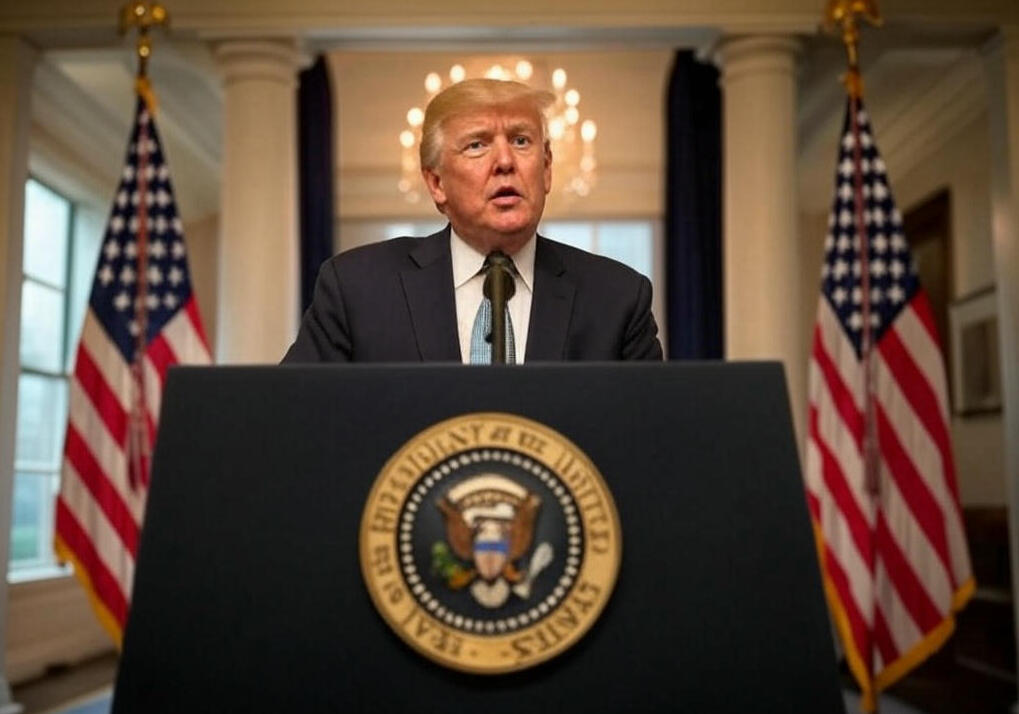
President Trump’s 25% tariffs on all steel and aluminum imports went into effect Wednesday, setting the stage for widespread economic disruption and potentially impacting the wallets of consumers across the country.
Construction faces higher costs and uncertainty
According to a report in Associated Press, the construction industry, which accounts for approximately one-third of all US steel shipments, is particularly vulnerable to the impact of these tariffs.
The industry relies on a complex global supply chain to construct everything from airports and schools to roads and bridges, according to Associated Builders and Contractors, a trade group with more than 23,000 members.
While some contractors were able to secure prices on steel or aluminum ahead of the tariffs, prolonged import taxes will inevitably lead to higher costs at a time when the construction industry is already grappling with rising expenses for labor and materials.
Moreover, the uncertainty surrounding the tariffs is likely to discourage companies from committing to large-scale building projects, stifling growth and innovation.
Annie Mecias-Murphy, the co-owner and president of JA&M, a commercial building contractor based in Pembroke Pines, Florida, echoes these concerns.
Her company relies heavily on rebar (reinforced steel) and post-tension cables to reinforce concrete.
“In attempts to get ahead of the tariffs, we do try to lock in our prices and work with our trade partners and clients on different strategies,” Mecias-Murphy told Associated Press.
“But ultimately, the rising costs make it difficult for small business owners like myself to contemplate large-scale multi-year projects.”
Groceries could get more expensive
The impact of the tariffs extends beyond large-scale construction projects, reaching into the everyday lives of American consumers through the unassuming steel can.
Tin mill steel, used for a wide range of packaging from soup cans to hairspray, is heavily reliant on imports.
The US currently imports approximately 70% of its tin mill steel, according to the Can Manufacturers Institute.
The institute warns that the more limited tariffs Trump imposed in 2018 resulted in the closure of nine tin mill lines in the US as manufacturers shifted to other types of steel or simply shut down.
As a result, only three US tin steel lines remain operational today.
Mick Beekhuizen, the president and CEO of The Campbell Co., recently stated in an earnings call that his company imports tin mill steel from Canada.
While Campbell is working with its suppliers to mitigate the impact of tariffs, Beekhuizen acknowledged that the company may be forced to raise prices, passing the cost onto consumers.
The Consumer Brands Association, which represents packaged food makers, is urging the Trump administration to exempt aluminum and steel products that are not readily available in adequate quantities within the US, reported Associated Press.
The association warns that failure to do so will likely result in higher grocery prices for American families.
“We encourage the Trump administration to recognize the different needs of different US manufacturing sectors,” said Tom Madrecki, vice president of supply chain resiliency at the Consumer Brands Association.
The auto industry
While most of Ford, GM, and Stellantis’ steel and aluminum already comes from domestic sources, experts caution that the tariffs could still lead to higher prices for consumers.
Domestic steel and aluminum producers will need to increase their capacity to meet demand, and any shortfalls in supply could drive up prices and increase vehicle costs.
Another automaker who could feel the pain from tariffs: Elon Musk’s Tesla. During a January earnings call, Tesla’s Chief Financial Officer Vaibhav Taneja noted the uncertainty around tariffs.
“The imposition of tariffs, which is very likely… will have an impact on our business and profitability,” Taneja told Associated Press, highlighting the vulnerability of the electric vehicle manufacturer to these trade policies.
This could be especially detrimental to American car buyers already grappling with high prices and economic uncertainty.
The average transaction price for a new vehicle was just over $48,000 last month, according to Kelley Blue Book.
As with the steel and aluminum tariffs imposed during Trump’s first term, automakers are likely to revisit their financial outlooks for the year as they brace for the potential impact on their bottom lines.
Appliances: from microwaves to espresso makers
Makers and sellers of household appliances, ranging from microwaves and dishwashers to espresso makers and toasters, are also having to navigate the challenges of rising costs.
Some companies, such as Whirlpool, appear to be more insulated from the tariffs due to their reliance on domestic production.
Whirlpool executives stated at an investor conference earlier this month that the company has locked in contracts for a minimum of one year for most of its raw materials, including steel.
“We are in a pretty good position as of right now,” Roxanne Warner, a senior vice president and controller at Whirlpool, told Associated Press.
However, other retailers are already feeling the pinch.
Abt, a family-owned appliance and consumer electronics store in Glenview, Illinois, has received notices from manufacturers indicating that the suggested retail price of countertop products will increase by 10% to 15% starting April 1, according to Richie Palmero, the store’s small appliance buyer.
While Abt sells coffee makers ranging from $100 to $500, as well as espresso makers priced from $1,000 to $5,000, Palmero acknowledged that even a modest increase in price could affect consumer behavior.
Palmero stated that adding another $250 on the price of a $2,500 is a lot, but she doesn’t think sales will suffer significantly.
The potential impact of tariffs on the appliance industry is also informed by historical precedent.
When tariffs were imposed on washing machines in early 2018 during Trump’s first term, prices for the appliances spiked 12%, according to a study published in the American Economic Review.
Clothes dryers, though not directly targeted by the tariffs, also became pricier.
Beverage bliss or aluminum agony?
US beverage companies consume more than 100 billion aluminum cans each year, highlighting the importance of this metal to the industry.
While most of the thin rolled sheets of aluminum alloy used for cans are produced domestically, can makers still rely on imports for a small percentage of their supply, according to the Can Manufacturers Institute.
The Brewers Association, which represents 9,500 independent US craft beer makers, estimates that 10% of US cans are made from Canadian aluminum.
The association warns that aluminum tariffs will force small brewers to pay more for cans, even as steel tariffs drive up the cost of equipment like kegs and fermentation tanks.
However, not all beverage manufacturers are concerned about the aluminum tariffs.
Molson Coors has stated that it shifted production in recent years and now sources “almost all” of its aluminum for US consumption from US sources.
Coca-Cola Chairman and CEO James Quincey downplayed the potential impact of the tariffs during a recent earnings call, stating that if aluminum cans become more expensive, Coke can shift to other materials like plastic bottles.
He also added that the tariffs didn’t necessarily mean a hit to the US business, indicating they had been through similar cost struggles, and they were going to continue to work through it.
“You should not conclude that this is some huge swing factor in the US business,” Associated Press reported, quoting Quincey.
It’s a cost. It will have to be managed. It would be better not to have it relative to the US business, but we are going to manage our way through.
Up in the air: aviation faces supply chain disruptions
The aviation industry, characterized by complex global supply chains and specialized components, also faces significant challenges from the tariffs.
Airplanes have a diverse array of metal parts, ranging from aluminum frames, wings, and door panels to steel landing gear and engine parts.
Many of these parts are highly specialized and are sourced from overseas.
The Aerospace Industries Association, which represents nearly 300 aerospace and defense companies, has issued a warning that tariffs could put their industry – and even national security – at risk.
“We are concerned about additional downward pressure on an already stressed American supply chain,” Dak Hardwick, the association’s vice president of international affairs, told Associated Press.
We are investigating mitigation strategies that would minimize the impacts of new tariffs on our industry, and we hope to work with the Trump Administration to highlight the critical role we play in America’s economic prosperity, national defense and deterrence.
While the precise impact of the tariffs on the US economy remains uncertain, it is clear that they have the potential to disrupt established supply chains, raise costs for businesses and consumers, and introduce new levels of volatility into the marketplace.
As these trade policies unfold, businesses and consumers alike will need to adapt to a rapidly changing economic landscape.
The post Construction, cans, and cars: industries on edge as Trump’s tariffs take effect appeared first on Invezz